



Introduction
An air blower is a mechanical device designed to move air or gas at a specific flow rate and pressure to support various industrial, commercial, and environmental applications. Unlike fans, which move large volumes of air at low pressure, air blowers are capable of delivering higher pressure airflow, making them suitable for demanding industrial processes.
In today’s industrial landscape, air blowers are indispensable components across a wide range of sectors. They are used for aeration, ventilation, combustion air supply, pneumatic conveying, cooling, drying, vacuum generation, and wastewater treatment. From maintaining oxygen levels in aquaculture ponds to supporting biological processes in sewage treatment plants, air blowers contribute directly to operational efficiency and sustainability.
With advancements in manufacturing technology, modern air blowers are engineered for energy efficiency, oil-free operation, low noise levels, and continuous-duty performance. These features not only reduce operational costs but also align with environmental and safety standards.
What Is an Air Blower?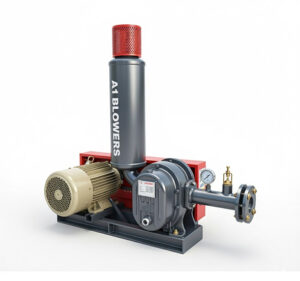
An air blower is a positive displacement or dynamic machine that increases the pressure of air or gas by mechanical means and delivers it to a system or process. The primary function of an air blower is to supply consistent airflow at a required pressure.
Air blowers operate between fans and compressors in terms of pressure generation. They are ideal for applications requiring moderate pressure and continuous airflow without contamination.
Importance of Air Blowers in Industrial Applications
1. Reliable Airflow Generation
Air blowers provide a steady and controlled supply of air essential for process stability and efficiency.
2. Process Efficiency
Consistent airflow ensures optimal performance of equipment, reduces downtime, and improves output quality.
3. Environmental Control
Used in ventilation and aeration systems, air blowers help maintain clean air and proper oxygen levels.
4. Energy Optimization
Modern air blowers are designed to deliver high performance with lower power consumption.
5. Operational Safety
Air blowers support safe handling of gases, fumes, and dust in industrial environments.
Types of Air Blowers
Twin Lobe (Roots) Air Blower
Twin lobe air blowers are positive displacement machines that deliver a fixed volume of air per rotation. They are widely used in wastewater treatment, aquaculture, and pneumatic conveying.
Advantages:
-
Oil-free air delivery
-
Robust and durable
-
Suitable for continuous operation
Ring / Turbine Air Blower
Ring blowers generate airflow using centrifugal force and are known for compact design and quiet operation.
Advantages:
-
Low noise and vibration
-
Maintenance-free operation
-
Ideal for light to medium-duty applications
Side Channel Air Blower
Side channel blowers combine features of fans and compressors, offering stable airflow at moderate pressure.
Advantages:
-
Energy-efficient
-
Compact and lightweight
-
Suitable for vacuum and pressure applications
Key Features of Modern Air Blowers
Oil-Free Operation
Ensures contamination-free air, making blowers suitable for food, pharmaceutical, and aquaculture industries.
Energy Efficiency
Advanced motor design and precision engineering reduce power consumption.
Low Noise Levels
Acoustic enclosures and optimized airflow paths minimize noise pollution.
Heavy-Duty Construction
Manufactured using high-grade materials to withstand harsh industrial environments.
Continuous Duty Capability
Designed for 24/7 operation with minimal performance degradation.
Applications of Air Blowers
-
Wastewater and sewage treatment plants
-
Aquaculture and fish farming
-
Cement and power plants
-
Pneumatic conveying systems
-
Food and beverage processing
-
Chemical and pharmaceutical industries
-
Textile and paper industries
-
Cooling and drying applications
How to Choose the Right Air Blower
Airflow and Pressure Requirements
Determine the required volume of air and operating pressure for the application.
Application Type
Different processes require specific blower technologies.
Energy Consumption
Selecting an energy-efficient blower reduces long-term operating costs.
Installation Environment
Consider temperature, humidity, and exposure conditions.
Maintenance and Service Support
Reliable service ensures long equipment life and uninterrupted operation.
Services Related to Air Blowers
Technical Consultation
Expert guidance to select the most suitable air blower for your application.
Customized Solutions
Blowers designed and configured according to specific process requirements.
Installation and Commissioning
Professional setup ensures optimal performance and system integration.
Maintenance and Repair
Regular servicing improves efficiency and extends equipment lifespan.
Spare Parts and After-Sales Support
Quick availability of genuine spare parts reduces downtime.
Future Aspects of Air Blowers
The future of air blower technology is driven by energy efficiency, automation, and sustainability.
Smart Air Blowers
Integration with sensors and IoT systems enables real-time monitoring and performance optimization.
Variable Speed Technology
Use of VFDs allows precise control of airflow and energy savings.
Eco-Friendly Designs
Reduced noise, lower emissions, and improved efficiency support environmental compliance.
Growing Industrial Demand
Expansion of wastewater treatment, aquaculture, and manufacturing sectors will increase demand for advanced air blowers.
Benefits of High-Quality Air Blowers
-
Improved process efficiency
-
Reduced energy consumption
-
Long service life
-
Low maintenance costs
-
Reliable and continuous operation
-
Enhanced environmental compliance
Conclusion
An air blower is a critical industrial machine that supports a wide range of applications by delivering reliable and controlled airflow. From environmental management to industrial processing, air blowers play a vital role in maintaining efficiency, safety, and sustainability.
Investing in a high-quality, energy-efficient air blower ensures consistent performance, lower operational costs, and long-term reliability. As industries continue to evolve and focus on sustainable practices, advanced air blower systems will remain an essential component of modern industrial infrastructure.