



Introduction
Vacuum pumps and boosters play a crucial role in modern industrial operations where controlled vacuum conditions are required. From wastewater treatment and chemical processing to manufacturing and packaging, vacuum systems improve efficiency, product quality, and process reliability.
A well-designed vacuum system ensures stable pressure, reduces energy consumption, and supports continuous operations. Vacuum pumps create the required vacuum level, while vacuum boosters enhance system performance by increasing capacity and efficiency, especially in high-demand industrial applications.
This blog provides a detailed overview of vacuum pumps and boosters, including their working principles, industrial applications, selection criteria, and future advancements.
What Are Vacuum Pumps and Boosters?
A vacuum pump is a device used to remove air or gases from a closed system to create a vacuum. It is widely used in industrial processes that require controlled pressure conditions.
A vacuum booster is an auxiliary device used in combination with a primary vacuum pump. Its purpose is to improve pumping speed and system efficiency, particularly at low pressure ranges where higher performance is required.
Together, vacuum pumps and boosters form a complete vacuum system capable of handling demanding industrial processes.
Working Principle of Vacuum Pumps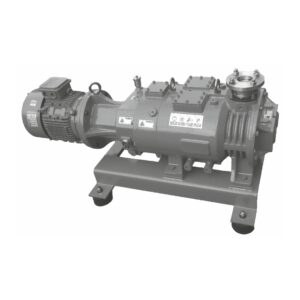
The working principle of a vacuum pump depends on its design, but the core function remains the same—removing gas molecules from a sealed space to create a vacuum.
Basic Working Process:
- Air or gas enters the pump through the inlet
- The pump mechanically removes gas molecules
- Gas is discharged through the outlet
- Pressure inside the system is reduced
Common types of industrial vacuum pumps include positive displacement vacuum pumps and dynamic vacuum pumps, each suited for specific pressure ranges and applications.
Working Principle of Vacuum Boosters
Vacuum boosters operate on the principle of increasing pumping speed and system efficiency. They are typically installed between the vacuum pump and the process chamber.
How Vacuum Boosters Work:
- Boosters handle large volumes of gas
- They reduce the load on the primary vacuum pump
- System reaches the desired vacuum level faster
- Overall energy efficiency improves
Vacuum boosters are especially effective in processes requiring high vacuum levels or rapid evacuation.
Types of Vacuum Pumps Used in Industry
Industrial applications require different vacuum pump technologies depending on process needs.
Common Types Include:
- Rotary vacuum pumps
- Roots-type vacuum pumps
- Liquid ring vacuum pumps
- Dry vacuum pumps
Each type offers unique advantages in terms of vacuum level, gas handling capability, and operational efficiency.
Benefits of Using Vacuum Pumps and Boosters
Vacuum systems offer multiple advantages across industries:
1. Improved Process Efficiency
Vacuum systems enhance production speed and process consistency.
2. Energy Savings
Using a vacuum booster reduces energy consumption by optimizing system performance.
3. Reliable Continuous Operation
Designed for 24/7 industrial use, vacuum pumps ensure stable operation.
4. Reduced Downtime
Efficient vacuum systems minimize process interruptions.
5. Versatile Industrial Applications
Suitable for a wide range of industries and operating conditions.
Industrial Applications of Vacuum Pumps and Boosters
Vacuum pumps and boosters are used in various industrial sectors:
Key Applications:
- Wastewater treatment plants
- Sludge handling and de-watering systems
- Chemical and pharmaceutical industries
- Food processing and packaging
- Pneumatic conveying
- Paper and pulp industries
- Plastic and rubber manufacturing
Their ability to handle continuous operation makes them essential for industrial production environments.
Role of Vacuum Pumps in STP and ETP Plants
In sewage and effluent treatment plants, vacuum systems are used for sludge handling, filtration, and de-watering processes.
Benefits in STP and ETP Applications:
- Improved sludge removal efficiency
- Faster filtration processes
- Reduced manual handling
- Enhanced plant hygiene and safety
Vacuum boosters further improve system performance during peak load conditions.
How to Choose the Right Vacuum Pump and Booster for Industrial Processes
Selecting the correct vacuum system is essential for achieving optimal performance.
Key Selection Factors:
- Required vacuum level
- Gas volume and flow rate
- Process temperature and environment
- Energy efficiency requirements
- Maintenance and service support
- Compatibility with vacuum boosters
Choosing the right combination ensures reliable and cost-effective operation.
Maintenance and Service Best Practices
Proper maintenance extends the life of vacuum pumps and boosters.
Recommended Practices:
- Regular inspection of seals and bearings
- Monitoring oil levels (for oil-lubricated systems)
- Checking vibration and noise levels
- Timely replacement of spare parts
- Periodic system performance evaluation
Preventive maintenance reduces unexpected breakdowns and operational costs.
Noise Control and Safety Considerations
Vacuum pumps and boosters can generate noise during operation. Acoustic enclosures and proper installation techniques help reduce noise levels and improve workplace safety.
Noise control solutions also help industries comply with occupational safety regulations.
Energy Efficiency and Sustainability
Modern vacuum systems are designed to reduce power consumption and environmental impact. Energy-efficient motors, optimized designs, and smart control systems contribute to sustainable industrial operations.
Using efficient vacuum pumps and boosters supports:
- Lower operating costs
- Reduced carbon emissions
- Environmentally responsible manufacturing
Future Aspects of Vacuum Pump and Booster Technology
Technological advancements are shaping the future of industrial vacuum systems.
Emerging Trends Include:
- High-efficiency and oil-free vacuum systems
- Smart sensors and condition monitoring
- Automated vacuum control systems
- Improved materials for longer equipment life
- Reduced noise and vibration designs
These innovations will further enhance system reliability and efficiency.
Conclusion
Vacuum pumps and boosters are essential components in modern industrial processes, delivering reliable vacuum performance and improved process efficiency. When selected and maintained correctly, they help industries achieve consistent production, energy savings, and long-term operational stability.
By integrating advanced vacuum technology and efficient boosters, industries can meet growing production demands while maintaining sustainability and cost-effectiveness.