


Introduction
Industrial environments often involve high-powered machinery such as air blowers, vacuum pumps, compressors, and motors that generate significant noise during operation. Excessive noise not only affects worker comfort and productivity but can also pose serious health risks and lead to non-compliance with occupational safety regulations.
Acoustic hoods play a critical role in controlling industrial noise by enclosing noisy equipment and significantly reducing sound levels without affecting machine performance. These enclosures are widely used in sewage treatment plants (STP), effluent treatment plants (ETP), manufacturing units, chemical plants, and power facilities where continuous operation of blowers and pumps is required.
This blog provides a comprehensive overview of acoustic hoods, their working concept, benefits, industrial applications, design considerations, and future advancements.
What Are Acoustic Hoods?
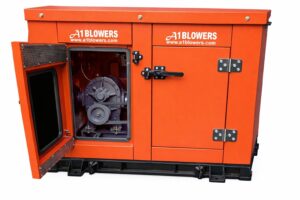
An acoustic hood is a specially designed enclosure used to reduce noise generated by industrial equipment. It is constructed using sound-absorbing and sound-insulating materials that limit the transmission of noise to the surrounding environment.
Acoustic hoods are commonly installed over:
- Twin lobe air blowers
- Ring / turbine blowers
- Vacuum pumps and boosters
- Compressors
- Motors and gearboxes
They are designed to maintain adequate ventilation and cooling while ensuring effective noise attenuation.
Why Noise Control Is Important in Industrial Facilities
Noise pollution in industrial settings can have serious consequences:
- Hearing loss and health issues for workers
- Reduced concentration and productivity
- Violation of workplace safety norms
- Complaints from nearby residential or commercial areas
- Increased risk of accidents due to poor communication
Acoustic hoods help industries meet regulatory standards while creating a safer and more comfortable working environment.
Working Concept of Acoustic Hoods
The working concept of an acoustic hood is based on two key principles: sound absorption and sound insulation.
How Acoustic Hoods Reduce Noise:
- The hood encloses the noise-generating equipment
- Sound waves are absorbed by internal acoustic insulation
- High-density panels prevent sound transmission
- Noise is reduced before it reaches the external environment
Specially designed airflow paths ensure that ventilation and cooling are maintained without allowing noise leakage.
Construction and Design of Acoustic Hoods
Acoustic hoods are engineered for durability, efficiency, and ease of maintenance.
Key Construction Elements:
1. Outer Structure
Made from heavy-duty steel sheets or panels to provide structural strength and sound insulation.
2. Acoustic Insulation
High-density sound-absorbing materials such as mineral wool or acoustic foam line the interior walls.
3. Ventilation System
Acoustic louvers and silencers allow air circulation while minimizing noise escape.
4. Access Panels
Removable or hinged doors enable easy inspection and maintenance of enclosed equipment.
5. Anti-Vibration Mounts
Help reduce structure-borne noise and vibration transmission.
Benefits of Using Acoustic Hoods
1. Significant Noise Reduction
Acoustic hoods can reduce noise levels by 15–35 dB or more, depending on design and application.
2. Improved Workplace Safety
Lower noise levels protect workers from hearing damage and improve overall safety.
3. Regulatory Compliance
Helps industries comply with occupational health and environmental noise regulations.
4. Enhanced Equipment Protection
The enclosure protects machinery from dust, moisture, and harsh environmental conditions.
5. Increased Productivity
A quieter environment improves communication, focus, and employee morale.
Applications of Acoustic Hoods in Industrial Sectors
Acoustic hoods are widely used across multiple industries.
Common Applications Include:
- Sewage Treatment Plants (STP)
- Effluent Treatment Plants (ETP)
- Wastewater pumping stations
- Chemical and pharmaceutical industries
- Power plants
- Cement and steel plants
- Manufacturing and processing units
Role of Acoustic Hoods in STP and ETP Plants
Importance in STP Plants
In STP facilities, air blowers and pumps operate continuously for aeration and treatment processes. Acoustic hoods help reduce noise levels near aeration tanks and blower rooms, improving working conditions and ensuring compliance with noise standards.
Importance in ETP Plants
ETP plants often operate in industrial or semi-urban areas. Acoustic hoods prevent noise disturbance to nearby surroundings while allowing efficient operation of blowers, vacuum pumps, and sludge handling equipment.
Acoustic Hoods for Blowers and Vacuum Pumps
Industrial blowers and vacuum pumps are major sources of noise due to high-speed rotating components and airflow turbulence. Acoustic hoods are specifically designed to address these noise sources without restricting airflow or increasing operating temperatures.
Custom-designed acoustic hoods ensure optimal noise reduction while maintaining blower efficiency and reliability.
How to Choose the Right Acoustic Hood
Selecting the right acoustic hood is essential for effective noise control.
Key Selection Factors:
- Noise level of the equipment
- Required noise reduction (dB level)
- Equipment size and layout
- Ventilation and cooling requirements
- Operating environment
- Ease of maintenance access
Custom-built acoustic hoods offer better performance compared to standard enclosures.
Installation Considerations
Proper installation ensures maximum effectiveness of acoustic hoods.
Best Practices:
- Ensure proper sealing to prevent sound leakage
- Maintain adequate ventilation airflow
- Use vibration isolation pads
- Allow sufficient clearance for maintenance
- Follow manufacturer installation guidelines
Correct installation enhances both noise reduction and equipment lifespan.
Maintenance of Acoustic Hoods
Although acoustic hoods require minimal maintenance, periodic inspection is recommended.
Maintenance Tips:
- Check insulation condition regularly
- Clean ventilation louvers and filters
- Inspect hinges and access panels
- Ensure seals remain intact
- Monitor temperature inside the enclosure
Proper maintenance ensures consistent noise reduction performance.
Energy Efficiency and Acoustic Hoods
Modern acoustic hoods are designed to balance noise control and energy efficiency. Optimized ventilation designs prevent overheating, ensuring that equipment operates efficiently without additional power consumption.
Efficient acoustic solutions contribute to sustainable and cost-effective industrial operations.
Future Trends in Acoustic Hood Technology
The future of acoustic hood design focuses on innovation and sustainability.
Emerging Trends Include:
- Advanced sound-absorbing materials
- Modular and compact designs
- Improved ventilation with lower noise leakage
- Integration with smart monitoring systems
- Lightweight yet high-performance structures
These advancements will further enhance noise control while reducing installation and maintenance costs.
Conclusion
Acoustic hoods are an essential component of modern industrial facilities, providing effective noise reduction for blowers, vacuum pumps, and other machinery. By improving workplace safety, ensuring regulatory compliance, and enhancing equipment protection, acoustic hoods contribute significantly to efficient and sustainable industrial operations.
With proper selection, installation, and maintenance, acoustic hoods help industries create quieter, safer, and more productive environments.