


Double Stage Ring Blower: Working Principle, Benefits, Applications & Buying Guide
For industries requiring reliable and efficient airflow for aeration, the double-stage ring blower—also known as a side-channel blower—is a vital solution. These blowers are highly versatile and suitable for a wide range of applications, including WTP, STP, and ETP plants, aquaculture, fish farming, and pneumatic conveying systems. Used in both industrial and commercial sectors, the double-stage ring blower operates as a high-pressure vacuum blower and delivers continuous airflow.
Ring or side channel blowers are installed in industrial and commercial sectors that require aeration systems. These blowers come in two types: single-stage and double-stage. Double-stage ring blowers (or side channel blowers) are used when higher airflow and pressure are required compared to single-stage models; they deliver greater airflow in less time and maintain a continuous flow of air at high pressure.
In this guide, we will explain what a double stage ring blower is, how it works, its major benefits, common applications, and the important factors you should consider before buying one.
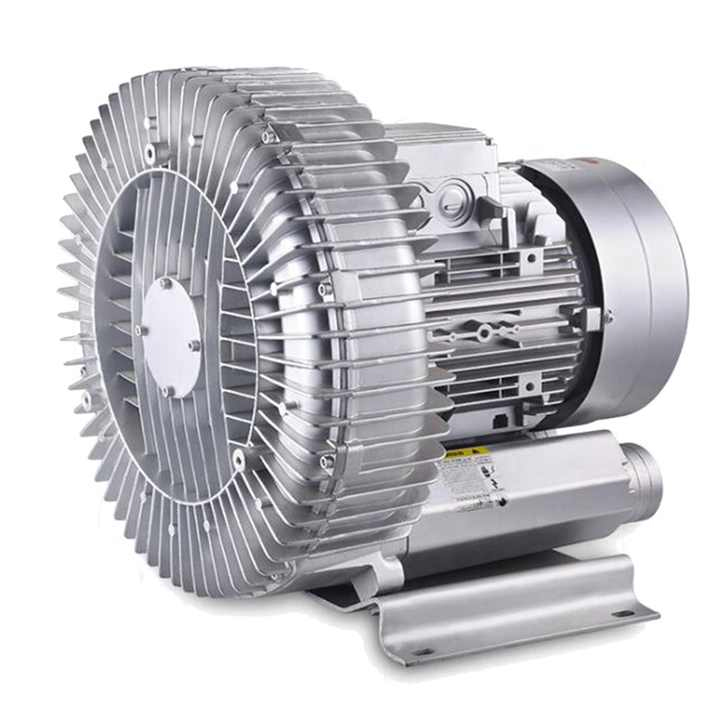
A double stage ring blower, also known as a two-stage regenerative blower or two-stage side channel blower, is an electrically driven blower designed to generate higher pressure or vacuum than many single-stage models.
The blower generally consists of an electric motor, impeller, side channel housing, inlet and outlet connections, and other supporting components. Instead of passing through only one compression stage, air moves through two stages of the blower, allowing the machine to achieve higher differential pressure.
One of the important characteristics of a double stage ring blower is that it can provide continuous airflow without using lubricating oil inside the air-handling chamber. This makes it useful for applications where clean, oil-free air is important.
Depending on the design, double stage ring blowers can be used for either pressure applications, vacuum applications, or systems that require both pressure and vacuum operation.
How Does a Double Stage Ring Blower Work?
The working principle of a double stage ring blower is based on centrifugal and regenerative air movement.
When the motor starts, it rotates the impeller at high speed. The specially designed impeller blades continuously move air through the side channel.
Here is the basic working process:
1. Air Enters the Blower
Air is drawn into the blower through the inlet connection. The inlet filter or silencer may be used to protect the blower from dust and reduce operating noise.
2. First Stage Air Movement
The rotating impeller accelerates the incoming air. As the air moves around the side channel, energy is transferred from the rotating impeller to the air.
This creates an increase in pressure and moves the air toward the next stage.
3. Air Passes to the Second Stage
In a double stage design, the air continues through a second compression stage. This additional stage increases the pressure or vacuum capability of the blower.
4. Final Air Discharge
After passing through the second stage, the air exits through the discharge port at the required pressure or vacuum level.
Because the process is continuous, the blower can provide a steady supply of air for applications that require uninterrupted operation.
Double Stage vs Single Stage Ring Blower
Choosing between a single-stage and double-stage ring blower depends mainly on the pressure, vacuum and airflow requirements of the application.
A single stage ring blower is generally suitable when the required pressure or vacuum is moderate. A double stage model is preferred when the system needs higher pressure or deeper vacuum.
Feature Single Stage Ring Blower Double Stage Ring Blower
Number of stages One Two
Pressure capability Moderate Higher
Vacuum capability Moderate Higher
Typical applications Light to medium-duty systems Higher-pressure/vacuum systems
Air quality Oil-free Oil-free
Maintenance Relatively low Relatively low
Continuous operation Possible Possible, depending on design
It is important not to select a blower simply because it has a higher motor capacity. The blower should be selected according to the actual airflow, pressure/vacuum, operating hours and system resistance.
Applications of Double Stage Ring Blower
Double stage ring blowers are used in a wide range of industrial and commercial applications.
1. wastewater treatment plant
2. sewage treatment plant
3. effluent treatment plant
4. aquaculture
5. fish farming
6. hatchery
7. pneumatic conveying
8. electroplanting
9. Industrial Vacuum Lifting
10. bag filters
Important Factors to Consider Before Buying a Double Stage Ring Blower
Buying a blower only by looking at motor horsepower is a common mistake. The correct selection should start with the operating requirements of the system.
1. Required Airflow
Determine how much air the application needs.
Airflow is commonly expressed in units such as:
m³/h
m³/min
CFM
L/min
Always compare airflow at the actual operating pressure or vacuum rather than relying only on the blower’s maximum airflow rating.
2. Required Pressure
If the blower is being used for aeration or air supply, determine the required operating pressure.
For example, wastewater aeration systems may require additional pressure because of water depth, diffuser resistance and pipeline losses.
3. Required Vacuum
For suction applications, determine the required negative pressure or vacuum level.
The blower should be capable of achieving the required vacuum while still providing the necessary airflow.
4. Motor Power
Motor capacity should be selected according to the blower’s operating point.
A larger motor does not automatically mean better performance. Oversizing can increase energy consumption and purchase cost without providing a practical benefit.
5. Voltage and Frequency
Check the electrical supply available at the installation location.
Common industrial configurations include:
Single-phase supply
Three-phase supply
50 Hz or 60 Hz systems
Different voltage requirements
Always confirm the motor specifications before ordering.
6. Operating Temperature
Ambient temperature and inlet air temperature can affect blower performance.
If the blower will operate in a hot environment, discuss the conditions with the manufacturer before selecting the model.
7. Duty Cycle
Consider how many hours the blower will operate each day.
A blower used continuously for 24 hours requires different attention to cooling, motor selection, installation and operating conditions than a machine used intermittently.
8. Noise Level
If the blower will be installed near workers or in a commercial environment, noise should be considered.
Inlet and outlet silencers, flexible connections and proper mounting can help manage operating noise.
9. Air Cleanliness
If the application requires clean air, use a suitable inlet filter and maintain it regularly.
A blocked or dirty filter can reduce airflow and increase the load on the blower.
How to Maintain a Double Stage Ring Blower
Although ring blowers are relatively low-maintenance machines, regular inspection is still necessary.
A basic maintenance routine should include:
Inspecting and cleaning the inlet filter
Checking electrical connections
Checking unusual vibration or noise
Inspecting bearings according to manufacturer guidelines
Checking the motor temperature
Checking inlet and discharge pipelines
Looking for air leakage
Ensuring cooling passages are not blocked
Checking mounting bolts and connections
If the blower suddenly becomes noisy, overheats, loses airflow or draws unusually high current, it should be inspected before continued operation.
Common Mistakes When Selecting a Ring Blower
Choosing Only by HP
Motor horsepower alone does not tell you whether a blower is suitable.
Two blowers with the same motor power can have different airflow and pressure characteristics.
Ignoring System Pressure Loss
Pipe length, bends, valves, filters and diffusers all contribute to pressure loss.
The blower should be selected after considering the complete system.
Using Maximum Airflow as the Operating Flow
Manufacturers may provide maximum airflow values under specific conditions. Actual airflow can be considerably different at higher pressure or vacuum.
Always check the performance curve or operating table.
Installing an Undersized Pipeline
A blower may be correctly selected but still perform poorly if the connected pipeline is too restrictive.
Ignoring Ambient Conditions
High temperature, dust and poor ventilation can affect blower performance and service life.
Frequently Asked Questions About Double Stage Ring Blowers
What is a double stage ring blower?
A double stage ring blower is a regenerative or side channel blower with two air-moving stages designed to provide higher pressure or vacuum than a comparable single-stage configuration.
What is the difference between a ring blower and a conventional blower?
A ring blower uses a high-speed impeller and side channel principle to move and compress air. Many ring blower designs offer oil-free air handling and relatively simple maintenance.
Is a double stage ring blower suitable for continuous operation?
It can be suitable for continuous-duty applications when the selected model is rated for the required duty and operated within its specified pressure, vacuum, temperature and electrical limits.
Can a double stage ring blower be used for aeration?
Yes. Double stage ring blowers are commonly considered for aeration applications such as wastewater treatment and aquaculture, provided the required airflow and pressure are within the blower’s operating range.
Is the air from a ring blower oil-free?
In a typical oil-free ring blower design, the air-handling path does not require lubricating oil. However, the exact construction should always be confirmed with the manufacturer for applications requiring specific air-quality standards.
How do I select the right double stage ring blower?
Start with the required airflow and operating pressure or vacuum. Then consider motor power, electrical supply, operating hours, ambient conditions, noise, piping losses and installation requirements.
Does a bigger blower always provide better performance?
No. A larger blower can consume more power and may not operate efficiently if it is not matched to the system requirements. Proper sizing is more important than simply selecting the largest available model.
Conclusion
A double stage ring blower is a versatile solution for applications that require reliable airflow, higher pressure or stronger vacuum performance. Its compact construction, oil-free air handling and relatively simple maintenance make it useful across industries such as wastewater treatment, aquaculture, pneumatic conveying, packaging, printing and industrial automation.
The most important step when buying a double stage ring blower is to understand the actual requirements of your application. Airflow, pressure, vacuum, operating hours, electrical supply, temperature and piping losses should all be considered before selecting a model.
If you are unsure which blower is suitable for your application, share your required airflow, pressure/vacuum, motor power, application and operating hours with the blower manufacturer or supplier. A technical recommendation based on the actual operating point will generally give you a much better result than selecting a blower based only on horsepower.
Looking for the right double stage ring blower for your application?
Share your required airflow, pressure or vacuum, motor capacity and application details with our technical team. We can help you identify a suitable blower configuration based on your actual operating requirements.